
You invested millions in the lobby. What about the first four minutes?
Hotels obsess over lobby design.
The lighting. The scent profile. The music selection. The furniture arrangement. The art on the walls. Every detail is curated to create an immediate impression of quality, comfort, and brand identity.
The same goes for rooms. Room amenities receive similar attention. Bedding quality. Bathroom fixtures. Technology integration. Mini-bar selection. The in-room experience is engineered to justify the rate and generate positive reviews.
But what about the first four minutes of a guest’s experience? Assuming there is an indoor parking garage entrance, think crowded downtown area of a city, where drivers have to enter either to valet or self-park.
This experience is often spent in a dim, confusing, beat-up parking garage that contradicts every brand promise made on the website.
The Arrival Sequence
Consider the actual guest journey:
A guest has browsed your photography, read reviews, perhaps paid a premium rate. They arrive after a flight or a long drive, most likely stressed, definitely forming first impressions. They pull into your parking structure.
What do they see?
For most hotels, it’s exposed concrete with tire marks and paint transfer.
Confusing level numbering. Unclear elevator access.
Faded wayfinding signage from the original construction.
Maybe some water staining or visible damage from years of vehicle contact.
That’s the actual first impression and not the carefully designed lobby.
The guest navigates the garage, finds a spot, walks to an elevator they had to search for, and finally reaches the lobby. By then, they’ve already spent several minutes in an environment that signals “utility space” rather than “premium hospitality.”
Same with shopping malls and retail centers.
The Psychology of Arrival
Environmental psychology research consistently shows that initial impressions color subsequent experiences. A 2025 ScienceDirect study found that environmental information positively affects both customer satisfaction and experience, with wayfinding serving as a significant mediating factor.
Separate research indicates that the average person spends 10% of their time in complex environments feeling disoriented. In parking garages with multiple levels, identical columns, and unclear navigation that percentage is likely higher.
According to PwC, 73% of consumers report frustration when they can’t easily navigate a space. For hotels, that frustration begins before guests reach the front desk.
The psychological concept of “priming” applies here. When guests start their experience in a stressful, confusing, or low-quality environment, they arrive at check-in with a different mindset than those who experienced a smooth, branded arrival.
That mindset affects how they perceive everything that follows, including whether the room justifies the rate.
What Guests Actually Notice
Hotel reviews frequently mention parking and not positively. “Confusing garage.” “Tight spaces.” “Hard to find the elevator.” “Garage looked run-down.” These comments appear even for properties with excellent room and service ratings.
For luxury properties, the disconnect is especially damaging.
A $400/night rate creates expectations of quality at every touchpoint. A beat-up garage signals that the premium is concentrated only where it’s visible in marketing photography.
Valet operations face particular scrutiny. When guests hand over high-value vehicles, they’re trusting your property with a significant asset. A garage that looks neglected raises immediate questions about how carefully their car will be handled.
The Departure Impression
The parking garage isn’t just the first impression it’s also the last.
A patron checks out, walks back through the garage, retrieves their car, and drives away. That final experience is fresh in their mind when they write a review, respond to a survey, or decide whether to book again.
First and last impressions carry disproportionate weight in memory, a psychological phenomenon known as the serial position effect. The parking experience bookends the entire stay.
What Premium Properties Are Doing
Forward-thinking hotels and retail centers are treating parking structures as brand touchpoints rather than utility spaces:
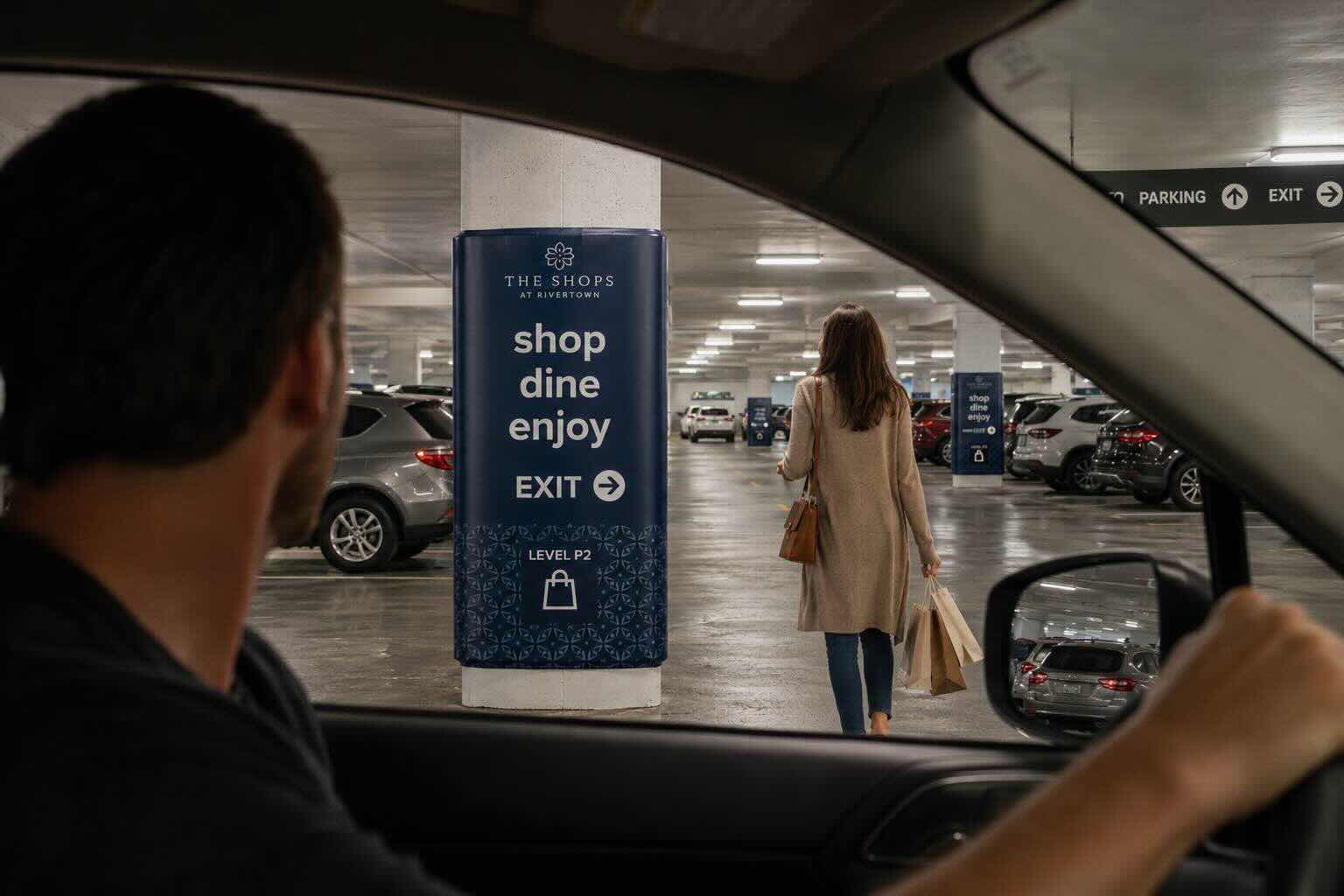
- Visual continuity: Extending the property’s design language into the garage through color schemes, branded graphics, and cohesive signage
- Intuitive wayfinding: Color-coded levels, clear elevator identification, and visual landmarks that reduce navigation stress
- Physical protection: Column treatments that prevent the scuffs and damage that make garages look neglected
- Amenity promotion: Using garage graphics to highlight on-property restaurants, spas, and experiences guests might not otherwise discover
The investment is modest compared to lobby renovations or room upgrades. But the impact on guest perception can be significant — precisely because expectations for parking garages are so low that any quality signals stand out.
The Bottom Line
Guest experience doesn’t start at check-in. It starts at the car door.
Hotels invest millions in lobbies, rooms, and amenities which are all visible in marketing photography. Meanwhile, the actual first and last touchpoints go ignored, creating a disconnect between brand promise and guest reality.
A $500/night guest shouldn’t park somewhere that looks like a utility space. The arrival experience should match the rate.