
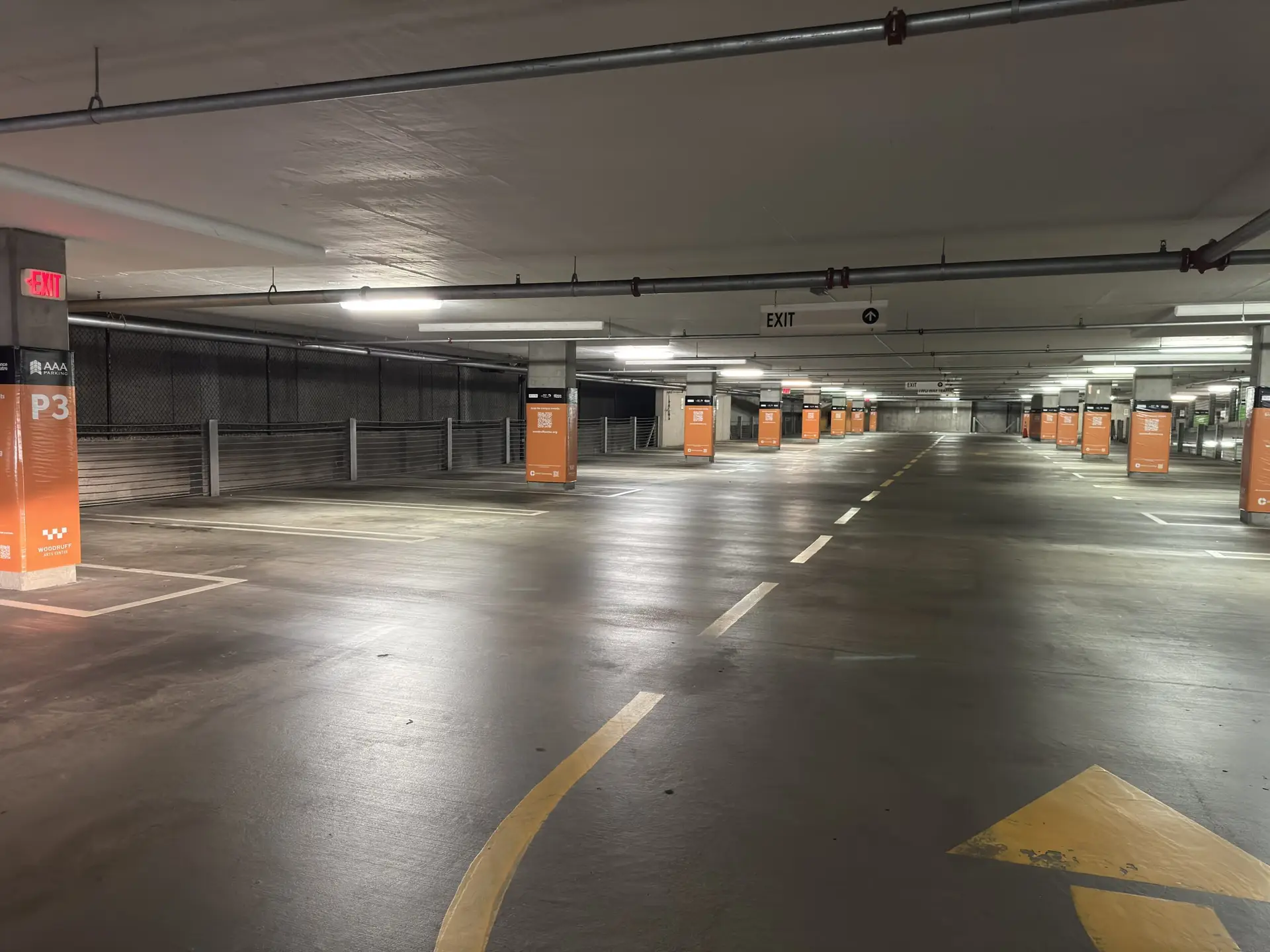
Parking garages generate revenue from one thing: parking fees. But the structural columns, walls, and walkways inside those garages see thousands of impressions a week and earn nothing. Column wrap advertising changes that by converting blank concrete pillars into paid ad placements, creating a recurring revenue stream that requires no additional staff, no operational changes, and minimal upfront cost.
This covers how the model works, what the data says about advertiser ROI, and how property owners can build a parking monetization program that actually performs.
What Is Column Wrap Advertising in a Parking Garage?
Column wrap advertising is a format where custom-printed graphics are installed around the structural support columns inside a parking garage. The wraps are made from durable material, designed to withstand vehicle contact and daily wear, covering the column on all sides and creating a 360-degree ad placement that drivers and pedestrians pass repeatedly during every visit.
Unlike a billboard seen once at highway speed, a parking garage column wrap is seen multiple times per visit. On the way in. Walking to the elevator. Walking back to the car. On the way out. That repetition is the core of why the format works.
Why Parking Structures Are Undervalued Advertising Real Estate
Most parking facilities attached to malls, airports, office buildings, hospitals, and stadiums share one thing: high weekly foot traffic and zero advertising revenue.
Property managers call revenue earned beyond core operations ancillary income. Parking advertising fits that definition exactly. It monetizes space that currently costs money to maintain but generates nothing beyond the parking fee itself.
The financial case goes further than monthly ad revenue. Advertising income raises a property’s net operating income. Higher NOI directly increases asset valuation. A well-structured column wrap program doesn’t just produce cash flow. It can increase what the building is worth on paper.
How Effective Is Parking Garage Advertising? The Data for 2026
The numbers on parking garage advertising effectiveness are consistent across multiple sources.
Ad Recall and Engagement
OOH advertising revenue hit a record $9 billion in 2024, with transit-related placements growing 8.9% year over year. OOH ads produce higher recall than TV, print, and digital combined, per a 2023 Solomon Partners analysis. And 68% of shoppers notice OOH ads on their way to a store or parking area, per OAAA and Morning Consult research.
Advertiser ROI
Cost per thousand impressions for outdoor advertising runs $2 to $7, among the lowest of any major media channel. Average return sits around $5 to $6 in sales for every $1 spent on OOH, per Omnicom’s Benchmarketing analysis. Adding OOH to a mobile campaign increases overall campaign ROI by up to 316%.
Real Campaign Results
A parking column wrap campaign produced a 20% increase in brand recognition for the advertised business, per Adweek reporting. A local restaurant saw a 30% rise in foot traffic after running ads in a nearby parking facility. And 40% of ad agency professionals worldwide plan to increase OOH budgets in the coming year.
Who Advertises in Parking Garages, and Why?
Brands are not buying parking garage ads out of desperation. They buy them because the audience is physically captive, moving slowly, with minimal competing stimuli.
A person scrolling social media can close the app. A driver navigating a parking structure cannot look away from their surroundings. That distinction is why parking garage advertising consistently outperforms digital formats on unaided recall metrics.
The audience targeting potential is also highly specific. A hospital garage reaches patients, visitors, and medical staff , a precise demographic for pharmaceutical brands, health services, and specialty clinics. A university garage reaches students and faculty right for food delivery, tech, and financial services brands. An airport garage reaches frequent travelers whom are valuable to hotels, car rental companies, and premium consumer brands.
Major brands including Coca-Cola and Nike have run structured garage campaigns in high-traffic urban locations specifically to build place-based awareness.
Parking Garage Advertising Formats Beyond Column Wraps
Column wraps are the flagship format, but a full parking monetization program typically uses a mix of placements.
Column wraps provide 360-degree pillar coverage at eye level. Best for brand awareness and repeated impressions during a single visit.
Wall banners and murals are large-format visuals visible from a distance across an entire level. Strong for announcements and brand launches.
Elevator and stairwell ads place messaging in captive moments of pause. High dwell time with zero distraction.
Floor decals combine directional wayfinding with sponsored messaging. They earn goodwill from visitors while generating impressions for the brand.
Digital screens near pay stations provide contextually timed placements where visitors are already stopped. Well-suited for promotional offers and time-sensitive messages.
Creative Applications That Go Beyond Standard Ad Placements
Naming rights and sponsorships. The Houston Rockets arena features the Toyota Tundra Garage. An NHL arena in Florida operates a Lexus Lot with reserved spots for Lexus drivers. These deals pair brand integration with venue-level exposure.
Sequential storytelling. Advertisers can run a message across five consecutive pillars: “Dream. Explore. Discover. Book Now.” The garage layout becomes a narrative format that a static billboard cannot replicate.
Functional hybrid placements. A column wrap that reads “Electric Vehicle Charging, Level 2” with a sponsor’s logo alongside it is useful to visitors and promotional for the brand at the same time. Utility and advertising in one placement.
Art and community installations. One downtown garage installed a local artist mural that generated millions of social media views and became a neighborhood attraction. Sponsored creative installations produce PR value that extends well beyond the physical ad surface.
How to Build a Parking Monetization Program
Step 1: Measure Traffic and Dwell Time
Before approaching advertisers, document your numbers. Weekly visitor count, average time spent in the facility, and peak hours. Identify the highest-traffic paths: elevator banks, pay stations, entry and exit points. These locations carry premium rates. Documented traffic data is what converts a pitch into a signed contract.
Step 2: Audit the Physical Environment
Advertising performs better in garages that feel safe, clean, and well-lit. A poorly maintained structure signals low brand value to potential advertisers and reduces the attention visitors pay to their surroundings. Lighting upgrades and basic maintenance are prerequisites.
Step 3: Match Advertisers to Your Audience
Segment your visitor base and approach advertisers whose customers overlap with that segment. Bring traffic data to every conversation. The more specific your pitch, the faster deals close.
Step 4: Place Ads Strategically
Prioritize high-traffic, low-speed zones. Columns near elevators and pay stations see the most repeated exposure. A smaller garage might run three column wraps and a wall banner. A large airport structure might deploy a full network of digital displays with rotating inventory.
Step 5: Measure, Report, and Renew
Track performance using QR scan rates, foot traffic analytics, and direct advertiser feedback. Build a performance report for each campaign period and share it with advertisers. Documented results convert short-term placements into long-term contracts and give you pricing leverage on renewals.
Step 6: Stay Compliant
Advertising installations must not obstruct exit signage, fire safety notices, or driver sightlines. Use fire-resistant materials. Verify local signage permits before installation. Requirements vary by municipality.
What Does Parking Garage Advertising Look Like in 2026?
Digital out-of-home is where the broader OOH market is heading. DOOH is projected to account for over 40% of total OOH ad spend by 2029. Inside parking structures, digital column displays and programmable screens can rotate multiple advertisers, respond to time of day, and connect to programmatic buying platforms, meaning ad inventory could eventually be sold automatically through an online marketplace rather than through manual sales outreach.
For property owners, this represents a shift from fixed monthly contracts to dynamic, auction-based pricing. Higher foot traffic in the facility means higher ad rates. The revenue model starts to behave more like a media company than a real estate lease.
Frequently Asked Questions
What is column wrap advertising in a parking garage?
Column [Column Wraps] advertising installs branded graphics printed on durable material around the structural support columns inside a parking garage. The wrap covers the column on all sides, creating a 360-degree ad visible to both drivers and pedestrians throughout their visit.
How much revenue can parking garage advertising generate?
Revenue varies by facility size, traffic volume, and advertiser demand. Property owners typically earn a percentage of gross ad revenue through an ad network partner, or negotiate fixed monthly rates directly with advertisers. High-traffic garages in urban areas attached to retail or sports venues generate the highest rates.
Why do advertisers prefer parking garage ads over digital ads?
Parking garage ads reach a physically captive audience moving slowly through a space with minimal competing stimuli. They cannot be skipped, blocked, or scrolled past. OOH formats consistently outperform digital on unaided recall metrics, and parking garages specifically offer extended dwell times that highway billboards and transit ads cannot match.
What types of businesses advertise in parking garages?
Any brand targeting a local, place-specific audience. Common categories include restaurants, retail stores, entertainment venues, automotive brands, healthcare providers, financial services, and consumer apps. The right advertiser depends on who uses the garage. Hospital garages attract health brands. University garages attract student-focused brands. Airport garages attract travel brands.
How do I start monetizing my parking structure with advertising?
Start by documenting weekly traffic counts and identifying the highest-traffic zones inside the facility. Audit the physical condition of the garage. Approach advertisers whose customer base matches your visitor demographic, and bring documented traffic data to every conversation. Partner with an OOH advertising network if you prefer a hands-off management model.
Are there regulations around advertising in parking garages?
Yes. Local signage permits are typically required. Installations must not obstruct exit signs, fire safety notices, or driver sightlines. Materials must meet fire resistance standards. Requirements vary by municipality, so verify local codes before installation.